Paver installation is the process of setting interlocking concrete or stone units over a compacted aggregate base, and it suits Newport Beach homeowners who want patios, walkways, and driveways that hold up to salt air and sandy coastal soils. Because many homes near the harbor and on the bluffs sit on shifting, moisture-prone ground, we focus on proper base compaction and polymeric sand joints that resist washout and weed growth. Good prep matters most. Newport Beach Concrete Contractors is scheduling paver projects throughout 2026, with spring and fall offering ideal curing and installation conditions along the coast.
What Our Paver Installation Service Includes in Newport Beach
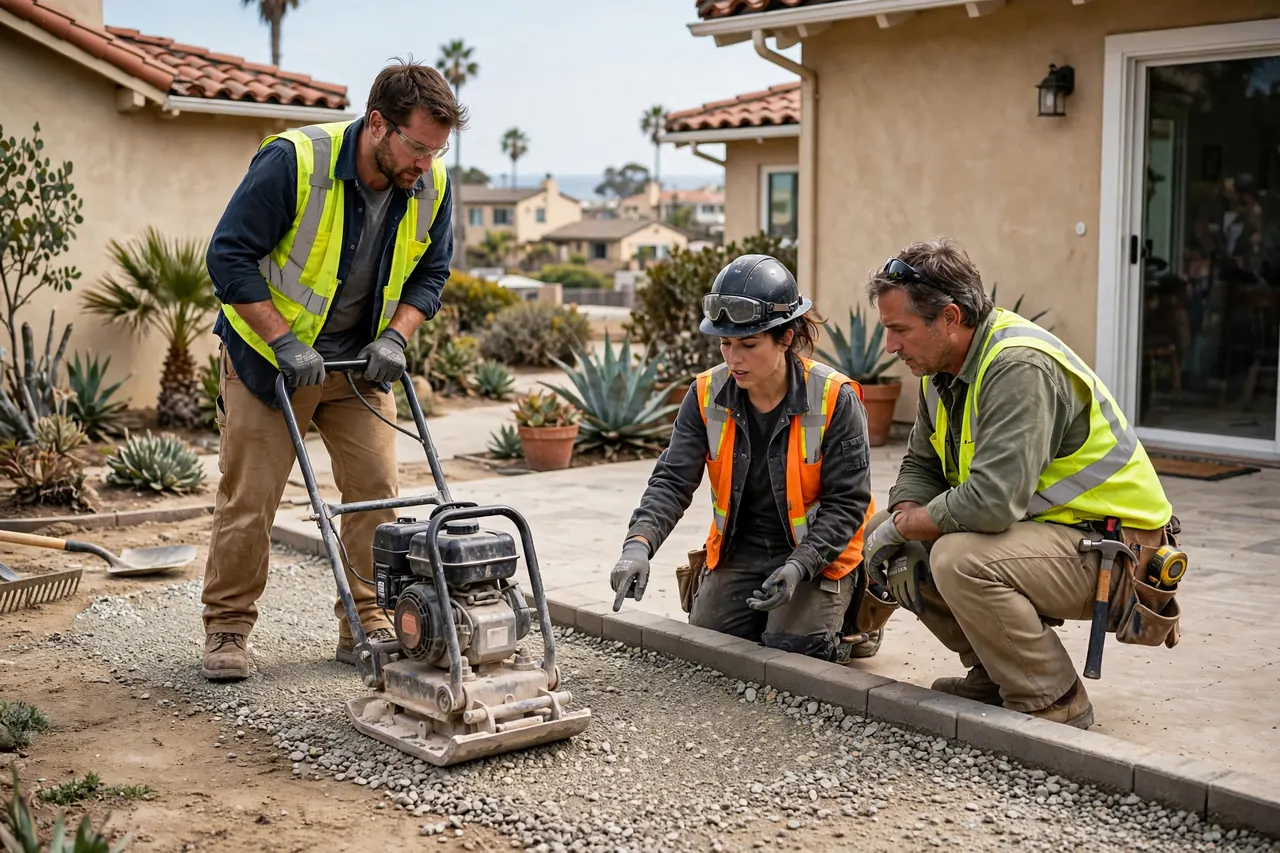
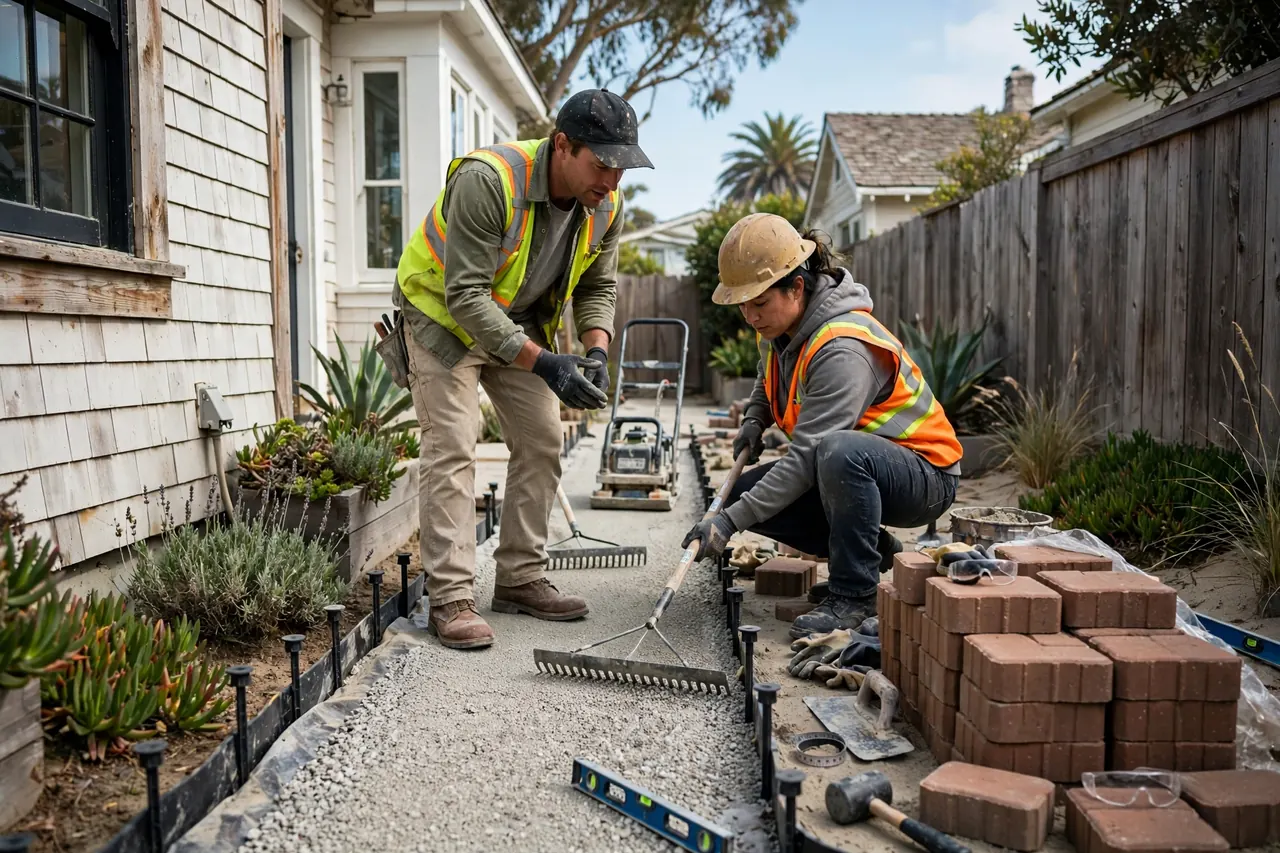
Paver installation is the process of excavating, grading, and building a layered base so individual pavers can lock together into a durable, flexible surface, and at Newport Beach Concrete Contractors it includes patios, walkways, driveways, and pool surrounds across Newport Beach properties. Each project starts with a site evaluation that checks soil type, drainage slope, and expected load. From there, crews excavate to the proper depth, install a geotextile fabric where soils are soft, and compact a crushed aggregate base in lifts using a plate compactor. A screeded bedding sand layer follows. This sequence is what keeps pavers level for years rather than months.
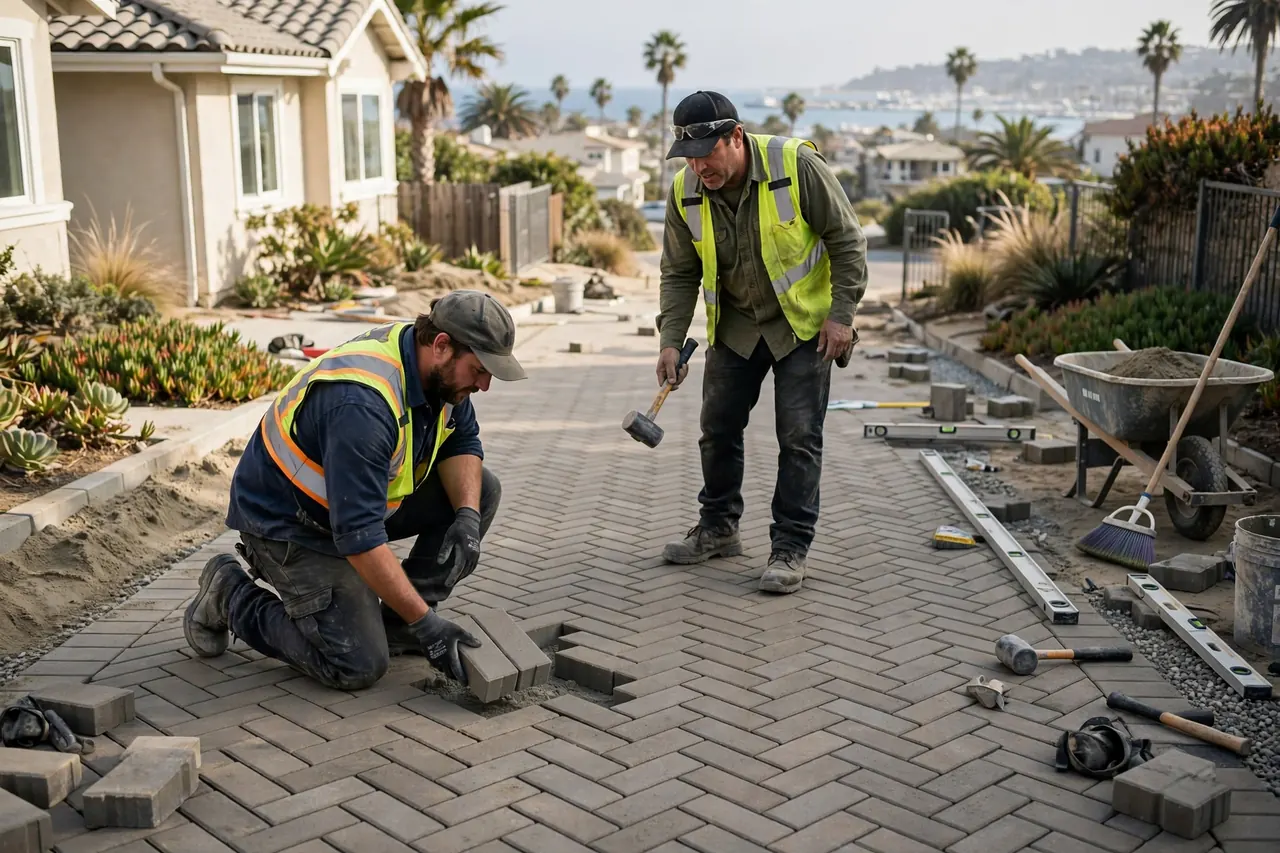
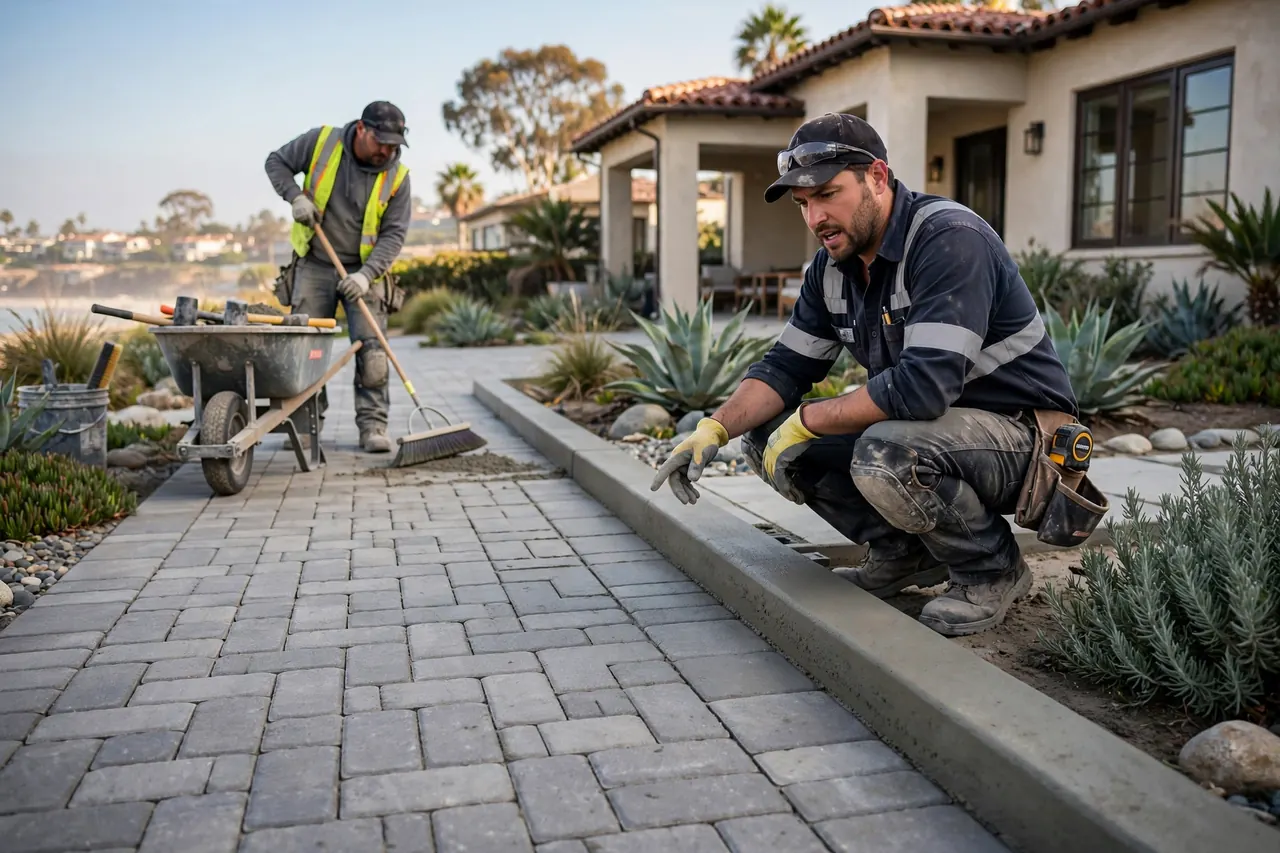
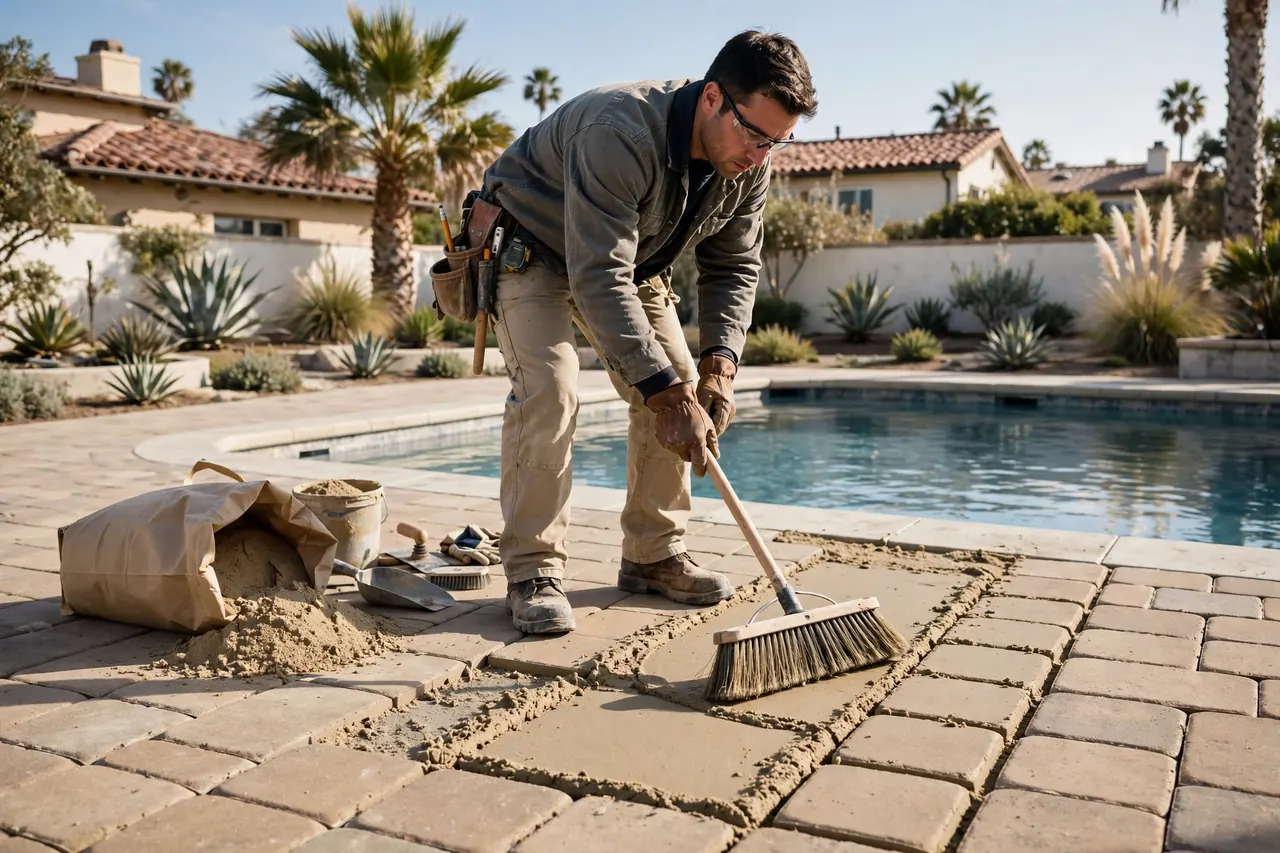
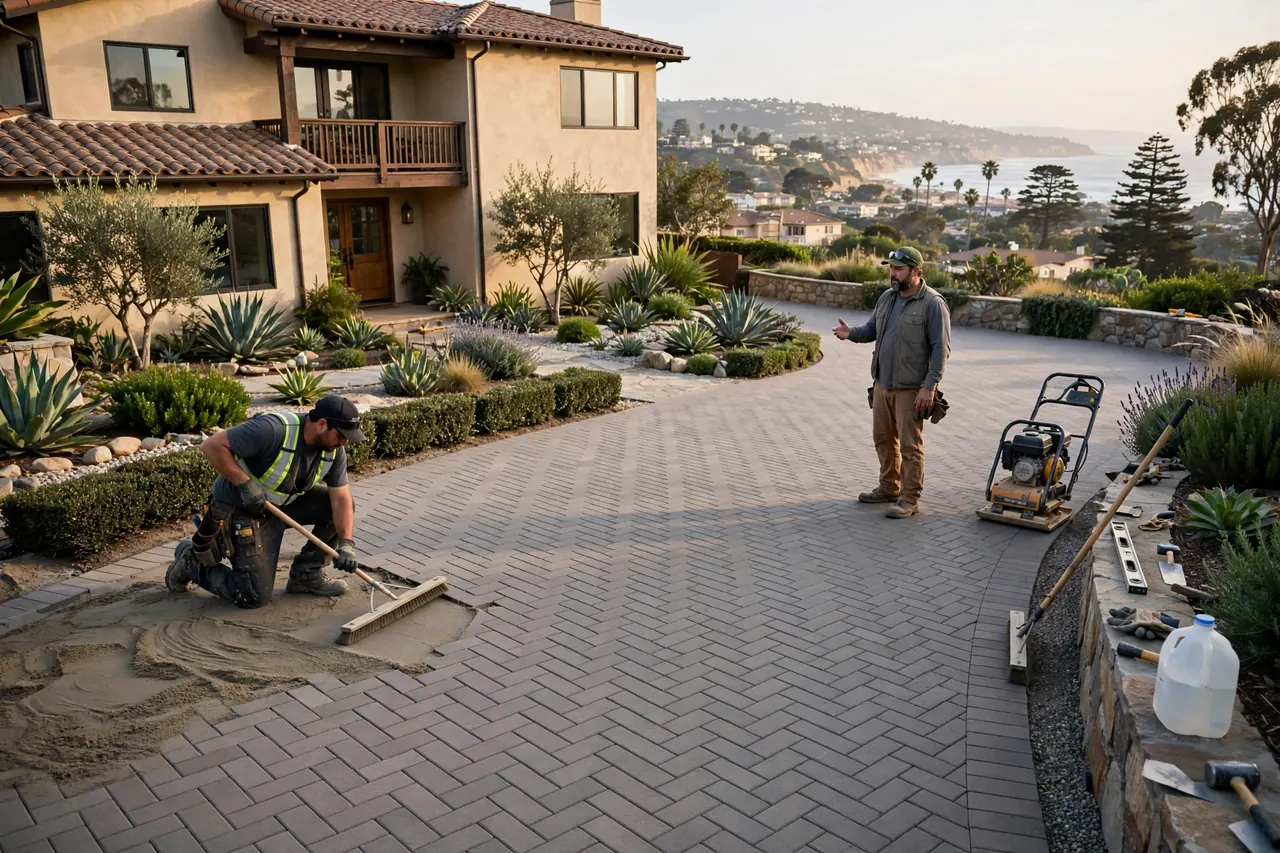
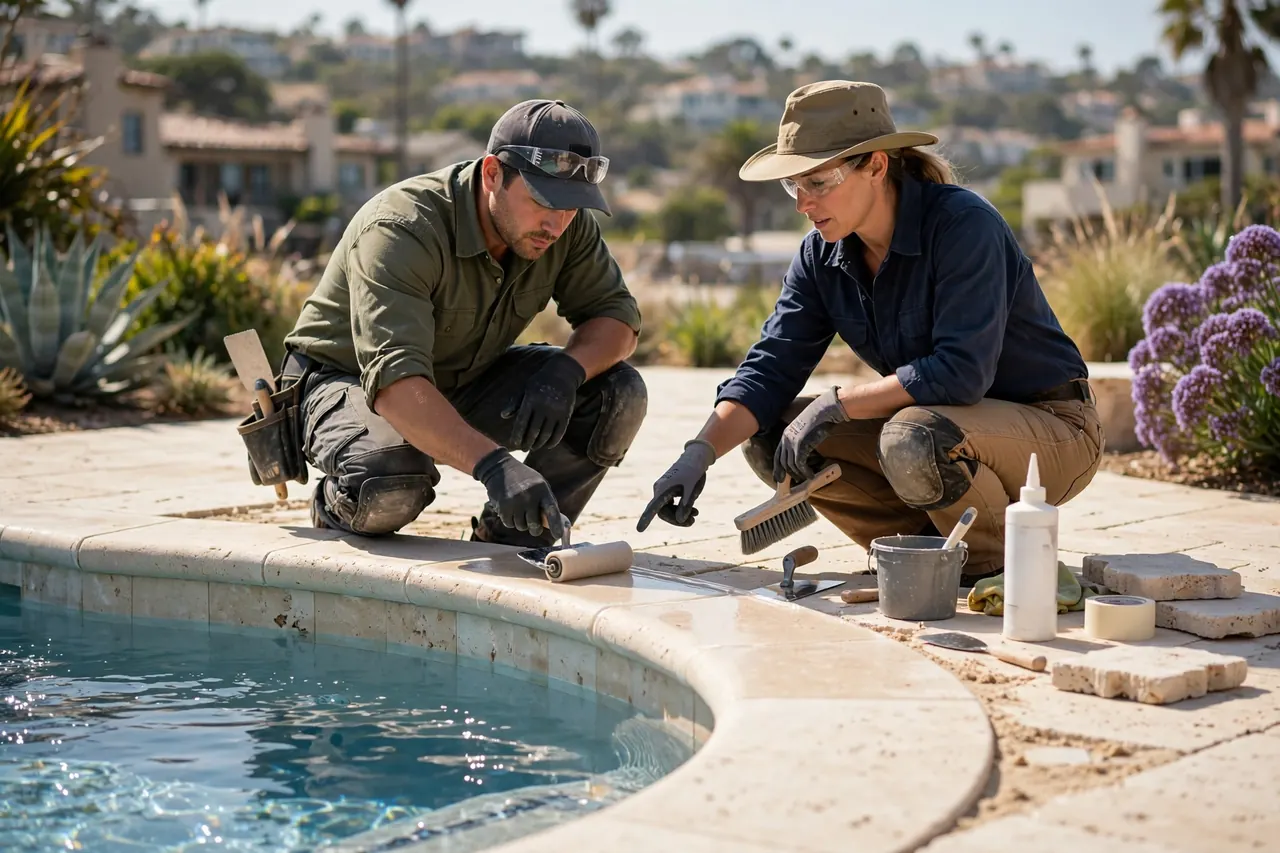
Once the base is set, pavers are laid in the selected pattern, such as herringbone for driveways where interlock strength matters, then secured with a concrete edge restraint and swept with polymeric sand to stabilize the joints. We install for single-family homes, multi-unit buildings, and light commercial spaces, adjusting base depth to match foot traffic or vehicle loads. Simple, but deliberate. In 2026, we are also recommending breathable sealers for coastal properties, since salt exposure and marine fog can fade color and loosen joints over time. Every job includes a written estimate and a post-job walkthrough so owners understand basic preventative care that protects the surface long term.
Signs You Need Paver Installation
Which Problems Does Paver Installation Solve for Newport Beach Homes?
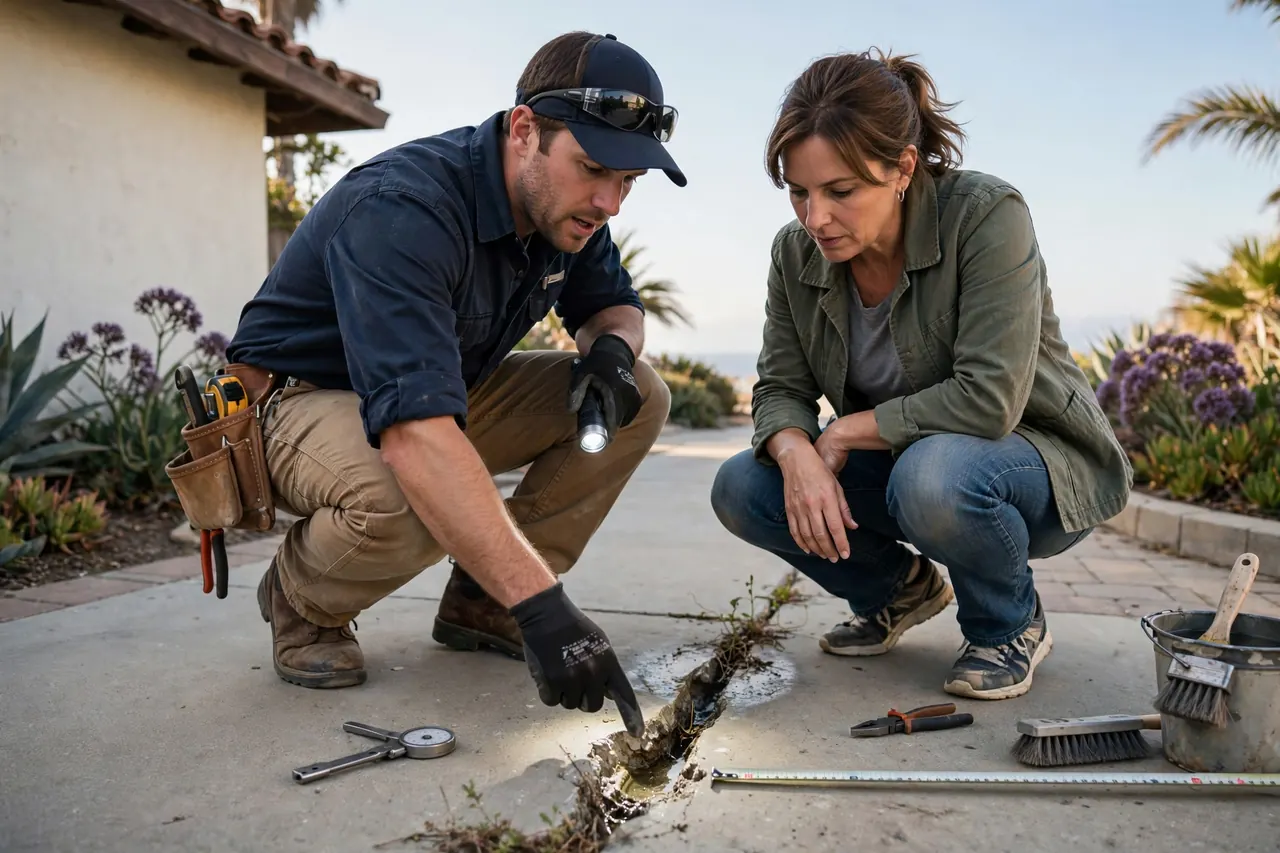
Paver installation solves cracked slabs, poor drainage, uneven walking surfaces, and worn hardscape that no longer handles daily use or coastal weather. Many Newport Beach homeowners first notice spalling or hairline cracks across older concrete patios, often caused by settlement and expansive soils beneath the slab. Others see standing water and ponding after winter rains because the surface was never graded with proper slope. These issues worsen quietly. Left alone, water intrusion can undermine the subbase and lead to heaving or trip hazards near entries and pool areas.
Older paver areas show their own warning signs, including sunken sections, rutting on driveways, joint sand washout, and weed growth between units, all pointing to a thin or poorly compacted base. Salt air along the Peninsula and Balboa Island also accelerates efflorescence and surface erosion on unsealed materials. Heading into 2026, many owners are replacing failing concrete with segmental pavers because individual units flex with soil movement and can be lifted and reset instead of torn out. Properly installed pavers fix the root cause. A correctly built base and stabilized joints restore long-term durability and even, safe footing.
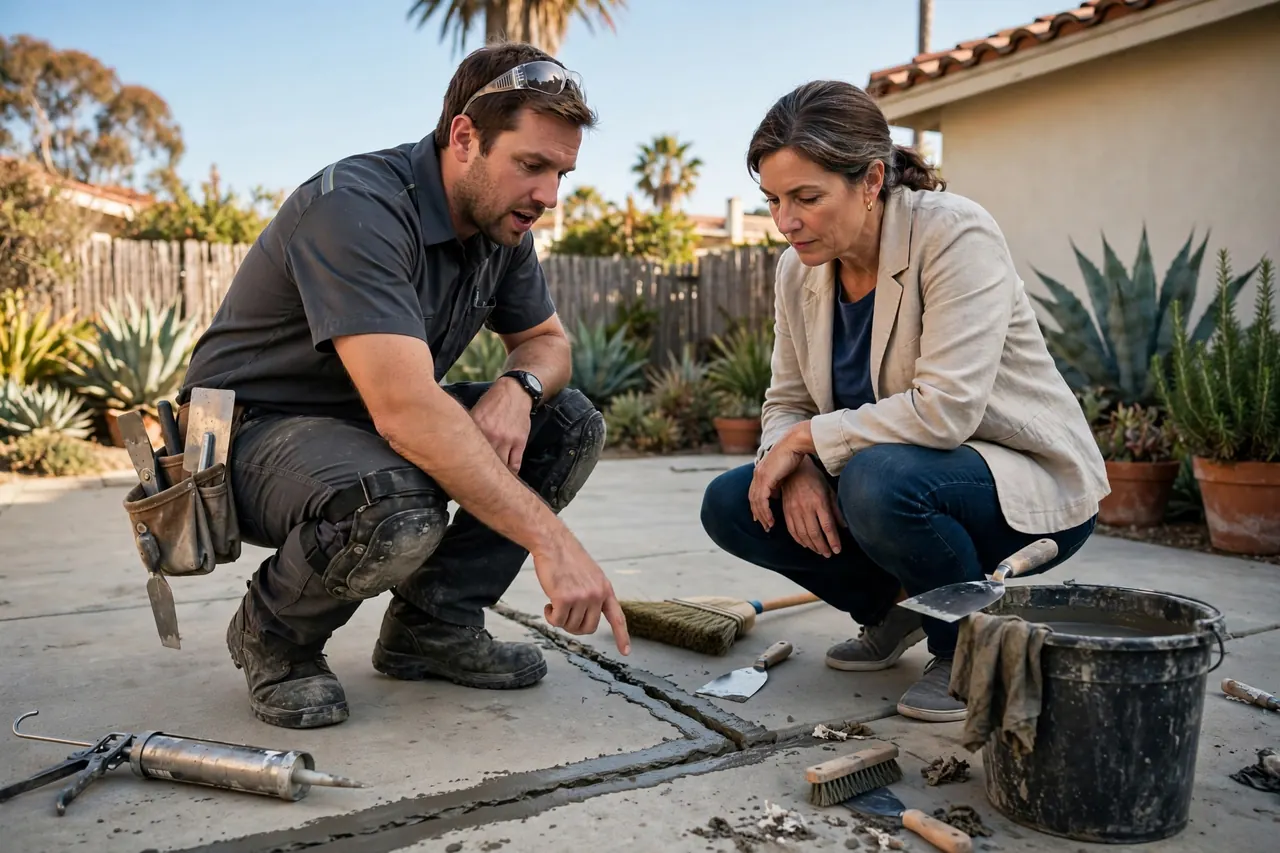
Every project starts with an on-site evaluation of soil type, drainage patterns, and existing grade. Newport Beach properties often sit on sandy or clay-heavy soils, and coastal moisture affects how a base performs over time. We measure the area, mark slope direction for runoff, and discuss paver styles and patterns. You receive a written estimate before any work begins.
2
Excavation and Subgrade Preparation
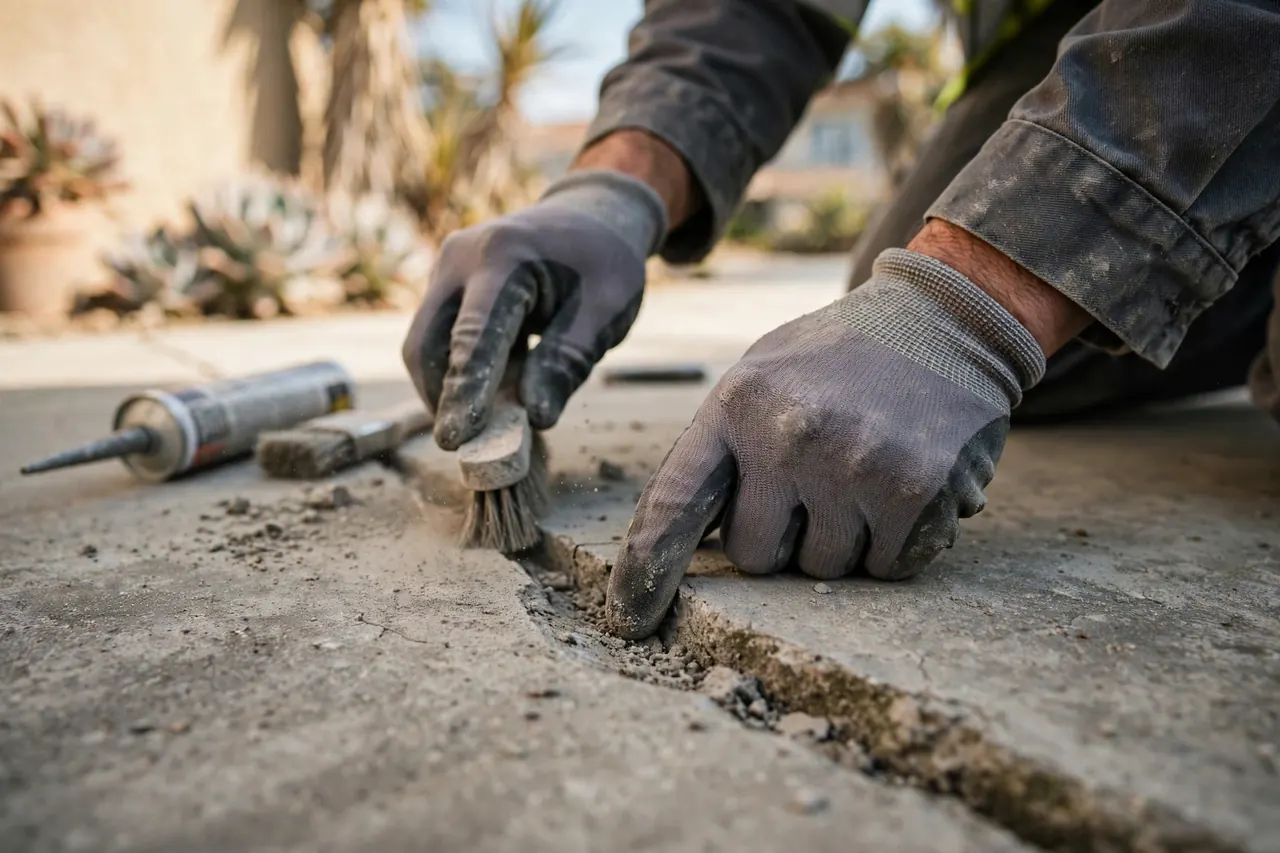
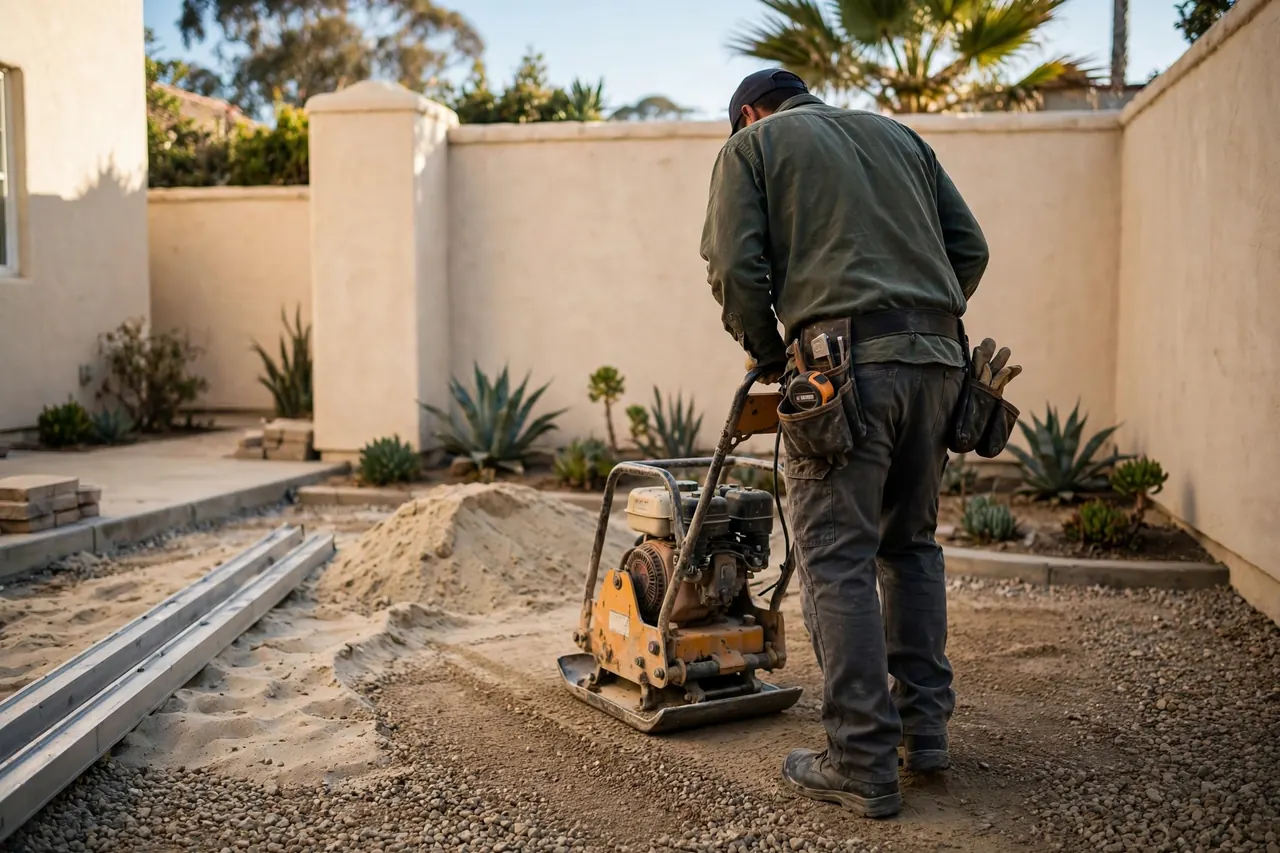
Crews remove existing surfaces, turf, and soil to the depth your project requires. Driveways need deeper excavation than patios because they carry vehicle loads. The exposed subgrade is then compacted with a plate compactor. This step matters. A firm subgrade helps prevent settling, rutting, and uneven pavers years down the road.
3
Base Installation and Compaction
Crushed aggregate base is spread in layers, called lifts, and each lift is compacted before the next goes down. Layering this way builds even density through the full base depth. Geotextile fabric may be added over weak soils to separate layers. A screeded bedding sand layer comes next, giving the pavers a level, consistent surface to rest on.
4
Paver Laying and Edge Restraint
Pavers are set in your chosen pattern, such as herringbone or running bond, with tight, consistent joints. Herringbone is often chosen for driveways because its interlock resists shifting under turning tires. Cuts along borders are made with a wet saw for clean edges. Edge restraints are then secured around the perimeter. They keep the field from spreading outward.
5
Joint Sand, Final Compaction, and Walkthrough
Polymeric or jointing sand is swept into the joints, and the surface is compacted again to lock the pavers together. This interlock spreads loads across the whole surface and limits weed growth and ant activity. We clean the area and complete a post-job walkthrough with you in 2026, covering sealing options and simple care habits that extend surface life.
Paver installation pricing in Newport Beach depends mainly on project square footage, paver material, and the base depth your site requires, and most 2026 projects are priced after an on-site review. Concrete pavers, clay brick, and natural stone such as travertine differ widely in material cost per square foot. Pattern complexity also affects cost. Herringbone or circular layouts require more cuts and labor time than a simple running bond, which shows up in the final quote.
Site conditions play a large role as well. Removing an old concrete slab, correcting poor grade, or adding drainage like channel drains increases excavation and haul-away costs, and driveways need a thicker aggregate base than garden paths. Access matters too. Narrow side yards common on Newport Beach lots can slow material delivery. Because each property is different, exact pricing requires a site assessment, and we provide free written estimates that itemize each part of the work.
Paver Installation Cost Factors
How Much Does Paver Installation Cost in Newport Beach?
Recent Paver Installation Projects in Newport Beach
Throughout 2026, our paver work across Newport Beach has ranged
from driveways and pool decks to compact courtyards. Each site brings different
soil, slope, and coastal moisture conditions.
Every job starts with proper subgrade compaction, a layered aggregate base,
and secured edge restraints. That foundation keeps pavers level and interlocked
far longer.
We close each project with a post-job walkthrough covering sealing and simple
care, so your surface keeps performing for years.
Paver Installation FAQs for Newport Beach Homeowners
Homeowners planning a new patio, walkway, or driveway often have practical questions before work begins. This FAQ covers the paver installation topics Newport Beach residents ask about most in 2026, from scheduling and site preparation to coastal soil conditions. Each answer explains how base preparation, edge restraints, and joint sand affect long-term durability. Good planning protects your investment.
Most homeowners should plan to schedule paver installation several weeks ahead so there is time for a site evaluation, written estimate, and material ordering. Lead time depends on the paver style, the amount of excavation and base aggregate needed, and any HOA review. Early planning helps keep the project on track.
A professional paver installation typically includes excavation, a compacted aggregate base, a screeded bedding sand layer, paver placement, edge restraints, and joint sand or polymeric sand. Each layer supports load distribution and helps prevent shifting, settling, and weed growth over time. The project usually ends with plate compaction and a post-job walkthrough.
Homeowners should clear furniture, planters, and vehicles from the work area and mark any private irrigation lines, lighting wires, or sprinkler heads before installation begins. Crews also need clear access for excavation equipment and pallets of pavers. A short conversation about drainage slope and gate access prevents surprises.
Paver installation cost in Newport Beach depends on square footage, paver material, base depth, site access, and design details like borders or patterns, so pricing is set through an on-site written estimate. Driveways usually need a deeper compacted base than patios, which affects material and labor. Clear line items make comparing options easier.
Coastal conditions in Newport Beach do affect paver installation, because salt air, sandy or expansive soils, and moisture require careful base preparation, proper drainage slope, and well-sealed joints. In 2026, many homeowners also choose permeable pavers or polymeric joint sand to manage runoff and reduce erosion beneath the surface. Periodic sealing helps resist efflorescence and salt wear.
Free Paver Installation Estimates
Get a Free Paver Installation Quote in Newport Beach for 2026
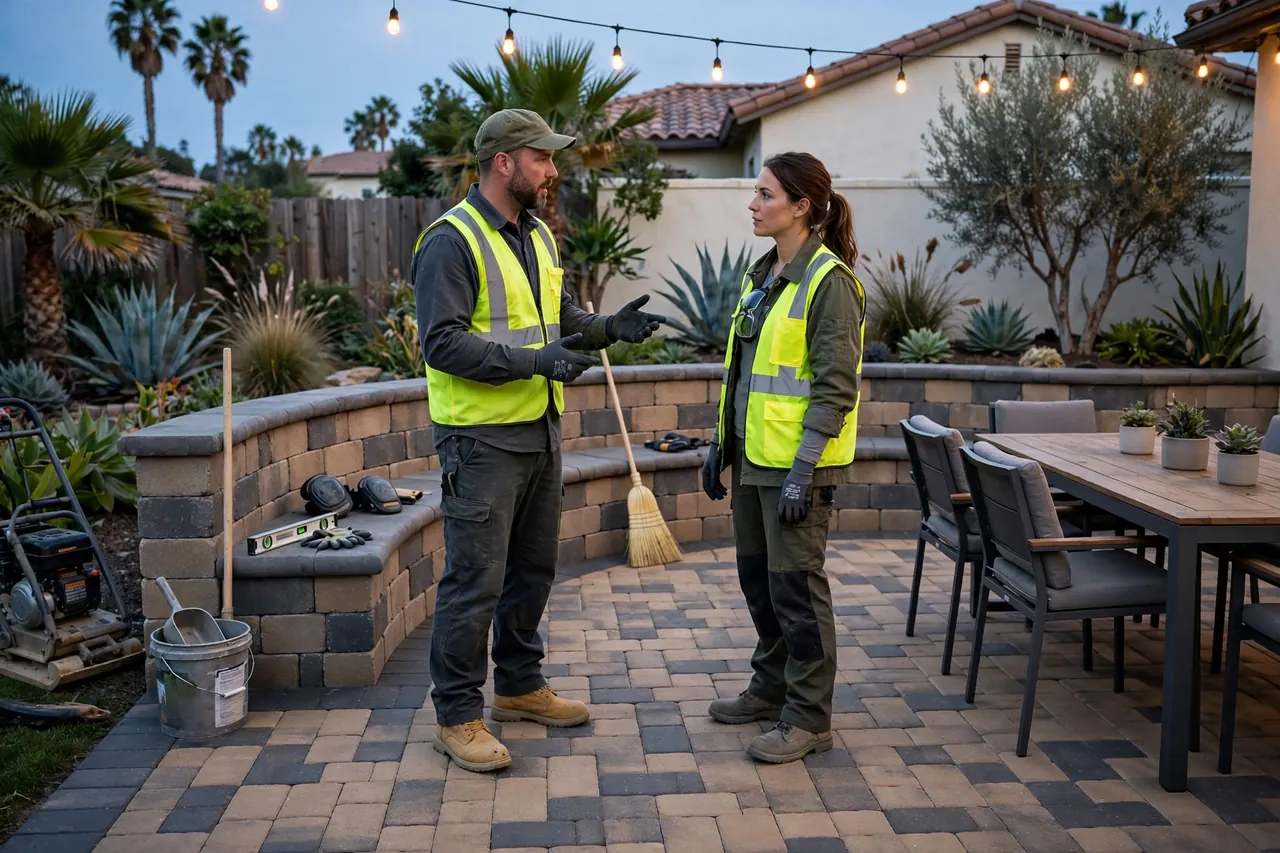
Planning a paver patio, walkway, or driveway in 2026 starts with understanding what your property actually needs. During an on-site visit, we evaluate soil conditions, drainage slope, and the compacted base depth required to keep interlocking pavers level for years, even with Newport Beach’s coastal moisture and salt air. You’ll receive a free written estimate that outlines the base preparation, edge restraints, joint sand, and paver material recommended for long-term durability, with no obligation to move forward. Scheduling is fast and simple. Reach out today to book your estimate and start building a hardscape designed to last.